
Cybercrime is criminal movement that either targets or uses a computer, a computer network or a networked gadget. Most cybercrime is committed by cybercriminals or hackers who need to make cash. In any case, sometimes cybercrime points to damage computers or networks for reasons other than benefit. These may be political or personal.

Cybercrime can be carried out by people or organizations. A few cybercriminals are organized, utilize advanced methods and are highly technically talented. Others are amateur hackers.
Types of Cybercrime:
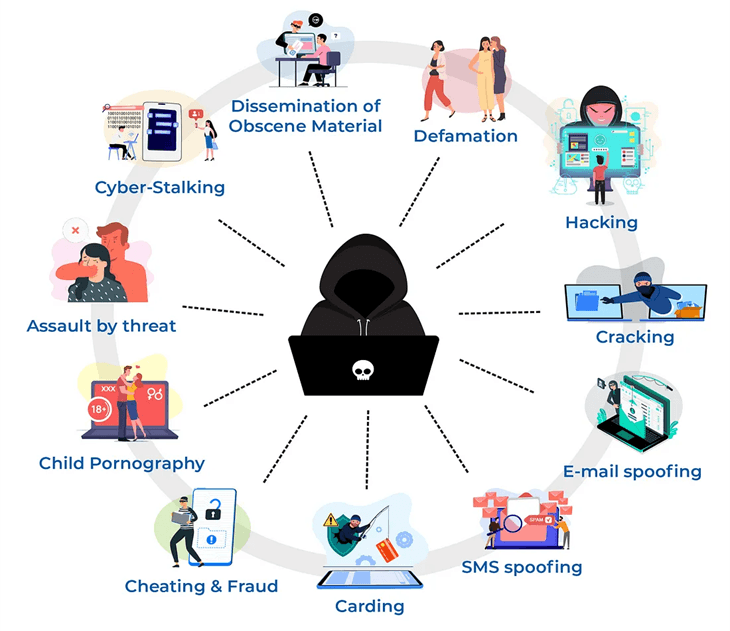
1. Email and internet fraud.
2. Identity theft (where individual data is stolen and used).
3. Theft of financial or card instalment data.
4. Theft and sale of corporate data.
5. Cyber extortion (demanding cash to avoid a threatened attack).
6. Ransomware attacks (a sort of cyber extortion).
7. Crypto jacking (where hackers mine cryptocurrency utilizing assets they do not own).
8. Cyberespionage (where hackers access government or company data).
9. Interfering with systems in a way that compromises a network.
10. Infringing copyright.
11. Illegal gambling.
12. Selling illegal things online.
13. Soliciting, creating, or possessing child pornography.
Cybercrime Includes One or Both of the following:
- Criminal movement focusing on computers using viruses and other types of malware.
- Criminal movement utilizing computers to commit other crimes.
- Cybercriminals that target computers may infect them with malware to damage gadgets or halt them working. They may moreover utilize malware to erase or take information. Or cybercriminals may halt clients from utilizing a website or network or prevent a business providing a software service to its clients, which is called a Denial-of-Service (DoS) attack.
- Cybercrime that uses computers to commit other crimes may involve utilizing computers or networks to spread malware, illegal data or illegal images.
- Cybercriminals are frequently doing both at once. They may target computers with viruses to begin with and at that point utilize them to spread malware to other machines or all through a network. A few jurisdictions recognize a third category of cybercrime which is where a computer is utilized as an accessory to crime. An example of this is utilizing a computer to store stolen data.
IMPACT OF CYBERCRIME:
Generally, cybercrime is on the rise. Concurring to Accenture’s State of Cybersecurity Flexibility 2021 report, security attacks increased 31% from 2020 to 2021. The number of attacks per company increased from 206 to 270 year on year. Attacks on companies affect people as well since many of them store sensitive information and individual data from customers.
A single attack – whether it’s a information breach, malware, ransomware or DDoS assault – costs companies of all sizes an normal of $200,000, and numerous affected companies go out of business inside six months of the attack, according to insurance company Hiscox.
Javelin Methodology & Inquire about distributed an Identity Fraud Study in 2021 which found that personality extortion losses for the year totalled $56 billion.
For both people and companies, the affect of cybercrime can be significant – fundamentally financial damage, but moreover misfortune of believe and reputational damage.
How to Secure yourself against Cybercrime:

Given its predominance, you may be pondering how to halt cybercrime? Here are a few sensible tips to ensure your computer and your individual data from cybercrime:
1. Keep Software And Working System Updated:
Keeping your software and working system up to date guarantees that you advantage from the most recent security patches to secure your computer.
2. Utilize Anti-Virus Computer Software And Keep It Updated:
Using anti-virus or a comprehensive internet security arrangement like McAfee a smart way to secure your system from attacks. Anti-virus software permits you to scan, identify and expel threats before they gotten to be an issue. Having this security in put helps to ensure your computer and your information from cybercrime, giving you piece of intellect. Keep your antivirus overhauled to receive the best level of protection.
3. Utilize Strong Passwords:
Be beyond any doubt to utilize strong passwords that individuals will not guess and do not record them anyplace. Or utilize a reputable password manager to create strong passwords randomly to make this easier.
4. Never Open Connections In Spam Emails:
A classic way that computers get contaminated by malware attacks and other forms of cybercrime is through e-mail connections in spam emails. Never open an connection from a sender you do not know.
5. Do Not Press On Links In Spam Emails Or Untrusted Websites:
Another way people gotten to be casualties of cybercrime is by clicking on joins in spam emails or other messages, or new websites. Dodge doing this to remain secure online.
6. Do Not Grant Out Individual Data Unless Secure:
Never grant out individual information over the phone or by means of e-mail unless you are totally beyond any doubt the line or e-mail is secure. Make certain that you are talking to the individual you think you are.
7. Contact Companies Straightforwardly Almost Suspicious Requests:
If you are inquired for individual data or information from a company who has called you, hang up. Call them back utilizing the number on their official site to guarantee you are talking to them and not a cybercriminal. In a perfect world, utilize a diverse phone since cybercriminals can hold the line open. When you think you’ve re-dialed, they can imagine to be from the bank or other organization that you think you are talking to.
8. Be Careful Of Which Site URLs You Visit:
Keep an eye on the URLs you are clicking on. Do they see genuine? Maintain a strategic distance from clicking on joins with new or URLs that see like spam. If your web security item incorporates usefulness to secure online exchanges, guarantee it is empowered some time recently carrying out money related exchanges online.
Do follow links for more Contents : https://athenas.co.in/react-native-comprehensive-guide-getting-2024/ https://cybervolunteer.mha.gov.in/webform/Volunteer_AuthoLogin.aspx








One Response