Join us as we uncover the truth of the dam(n) demolition.
Why should the dam be broken, as the decision was made by America?
Dams, both old and new, have an influence on the entire ecological system. When someone builds a dam on a river, it traps the nutrients and living beings inside. This stops the life cycles of many water species and messes up the food web. Dams make the water move slower and get warmer, which helps deadly algae and parasites grow. These changes have already killed off many types of mussels, fish, and even a dolphin. Dams have hurt salmon and since people put them up, folks are upset to see these important species suffer when we can do something to protect them.
Fish passage is about how fish move up and down rivers to get to places where they spawn and eat. Fish need to move just like birds and butterflies do. But since we can’t spot fish or other creatures travelling in rivers many people don’t get how much dams mess up a water ecosystem. Take salmon, for instance. It remembers the birthplace and swims back from far away to that exact spot to lay eggs again, keeping up a tradition that’s as old as their species. To help protect at-risk species, build safer structures for communities, and boost climate resilience, making it easier for fish to pass is one of the best things we can do.
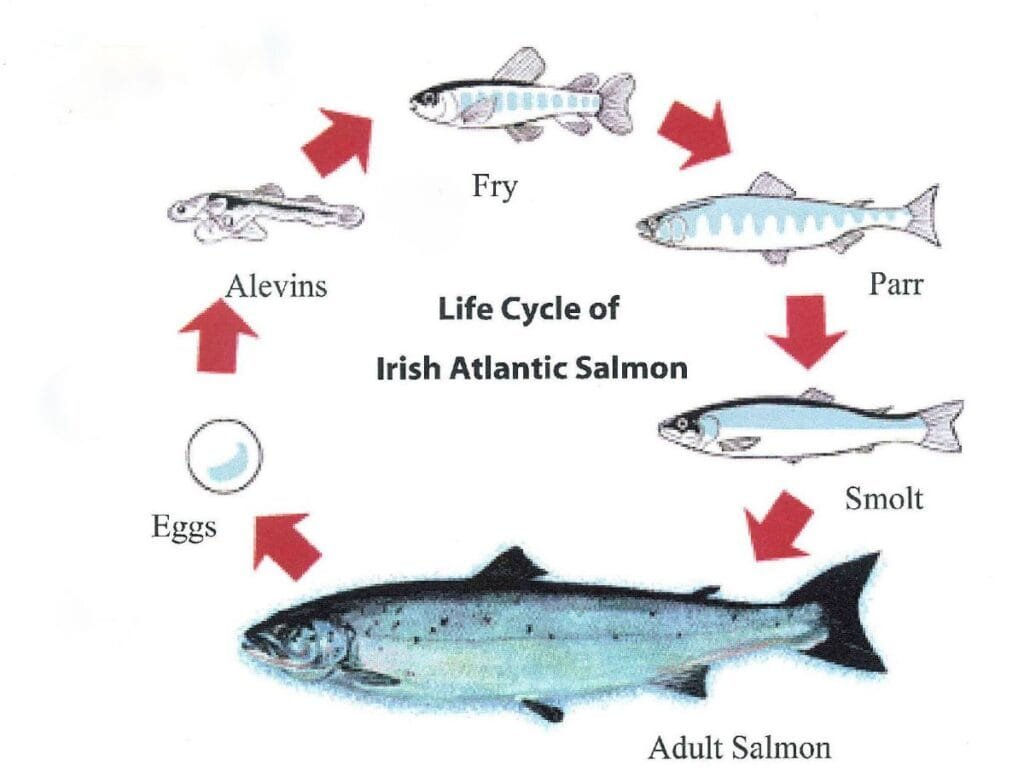
Life Cycle of SALMON
Salmon are hatch in fresh water, move to sea water in which they matures and finally return to their natal or birth stream to spawn and die.
There are five species of salmon that live in Washington waters: Chinook, chum, coho, sockeye and pink. These may be different in life histories of Pacific salmon but they go round a cycle and need almost the same settings to thrive in.
Eggs : SALMON
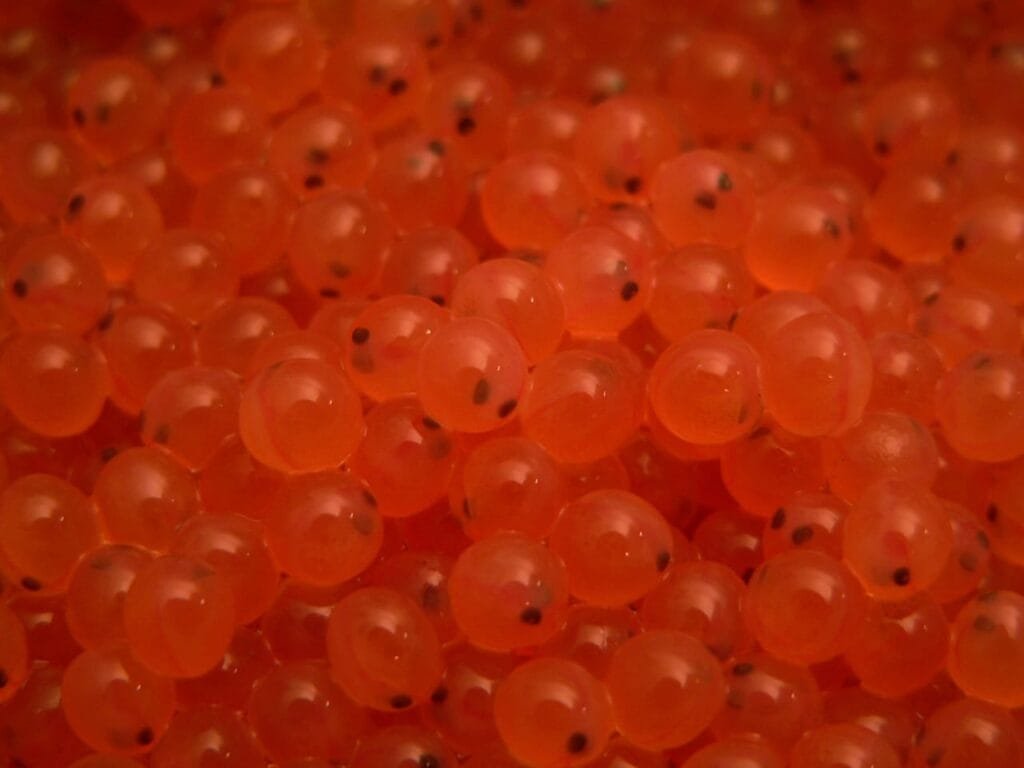
Born from tiny eggs in freshwater streams or rivers, salmon are a kind species of fish that inhabits the world’s oceans and seas. The females deposit their fertilized eggs in red, or nests made of gravel which is scooped out along the bottom of the stream and where water supply oxygen as well as helps in eliminating wastes or sediments within the red. The eggs are going to be laid here and are going to stay here until the time when they will be ready to come out.
Alevins : SALMON
Fish laid eggs “incubate” and after sometime small salmon known as alevins are hatched. Alevins remain in their egg yolk sac which is present on the belly of the fish. In the yolk sac alevins get the nutrition they need as they develop. The alevin stage is the first stage of the life cycle, which lasts for several months depending on the species; during this stage the alevin has no physical relations with other fish and remains in the red for a few months until it is large enough to swim away from the red and start feeding on the yolk that is left in the sac.
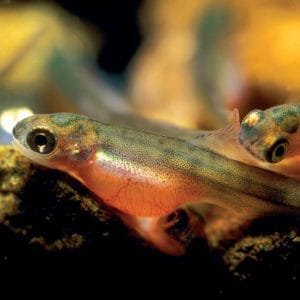
Fry : SALMON
When alevins are completely yolkless, the term fry is normally used. After fry have left their red, they start foraging for food and also endeavor not to become the meals of their predators. At this stage fry may start to become more saline and thus start shifting between sea and fresh water. Migration from freshwater to saltwater may start at a different time in development for each species of the pickaxe fish.
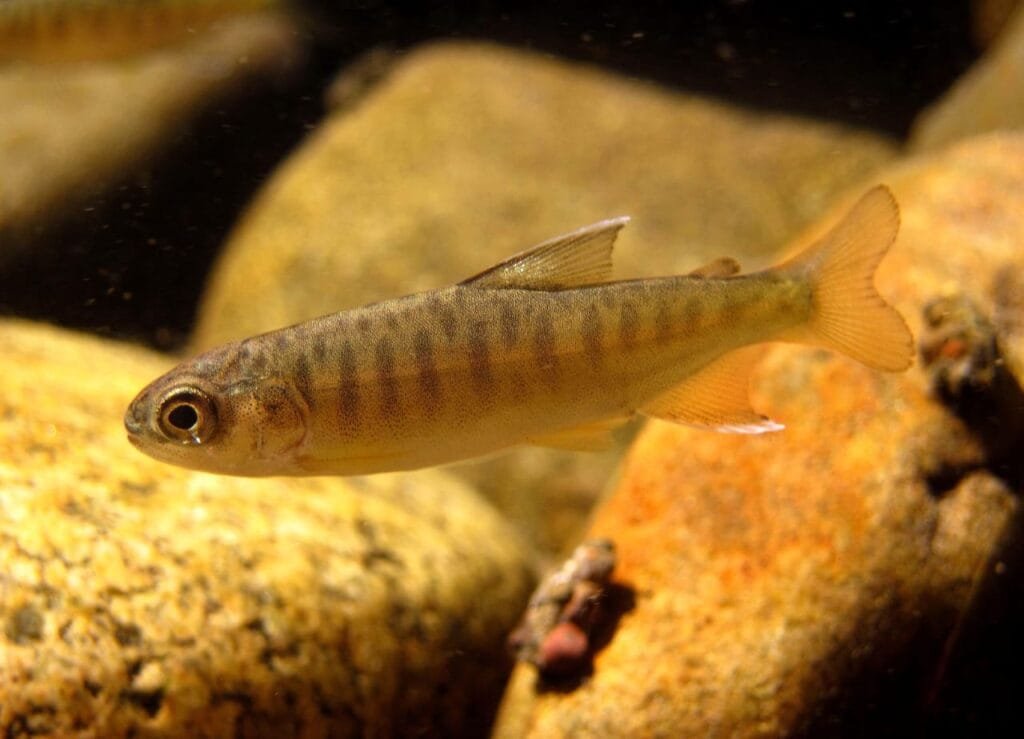
Smolts : SALMON
Fry at some point get a cue and migrate from the nursery to the ocean. Of course, this migration causes fry to undergo a physical transformation so that they can adapt to the new environment, which is the ocean’s salty water. They are known as smolts at this stage of development. They have a tendency to grow new scales which gives a silvery look to the creature. This is the last occasion when salmon will be in freshwater until they are to spawn.
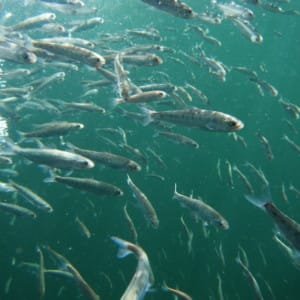
Adults : SALMON
Still searching for food, salmon are now in seawater. Adult salmon depending on the type can live in the ocean from as long as one year up to a maximum of eight years. Just as when they migrate out, salmon acquire new signals to help them find their way back to the streams they were spawned.
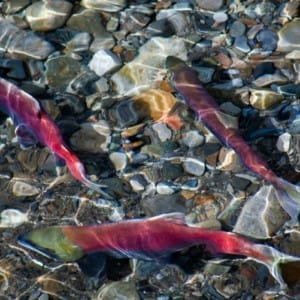
Spawning and Death : SALMON
Of course, even those salmon that have returned to the coastal sea are not through changing, especially for those that are preparing to go back to fresh water for spawning. Spawners acclimatize with freshwater, its coloration alters, some develop humped backs, hooked jowls. Getting back to the streams of their birth is a very arduous exercise, not only because of the transformations which take place or the states they transverse but also because it is a period of navigation upstream. Sub adult males and females after they stop migrating and deposit their eggs in newly constructed reeds, return to their natal streams and die.
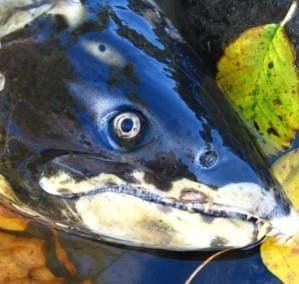
The dead salmon carcasses are then consumed by the river current to the rest of the watershed are deposited to be source of nutrients for other species and habitat. These dead salmon are especially favorable to the environment around because they deliver nutrients from the ocean.
Dams versus Salmon
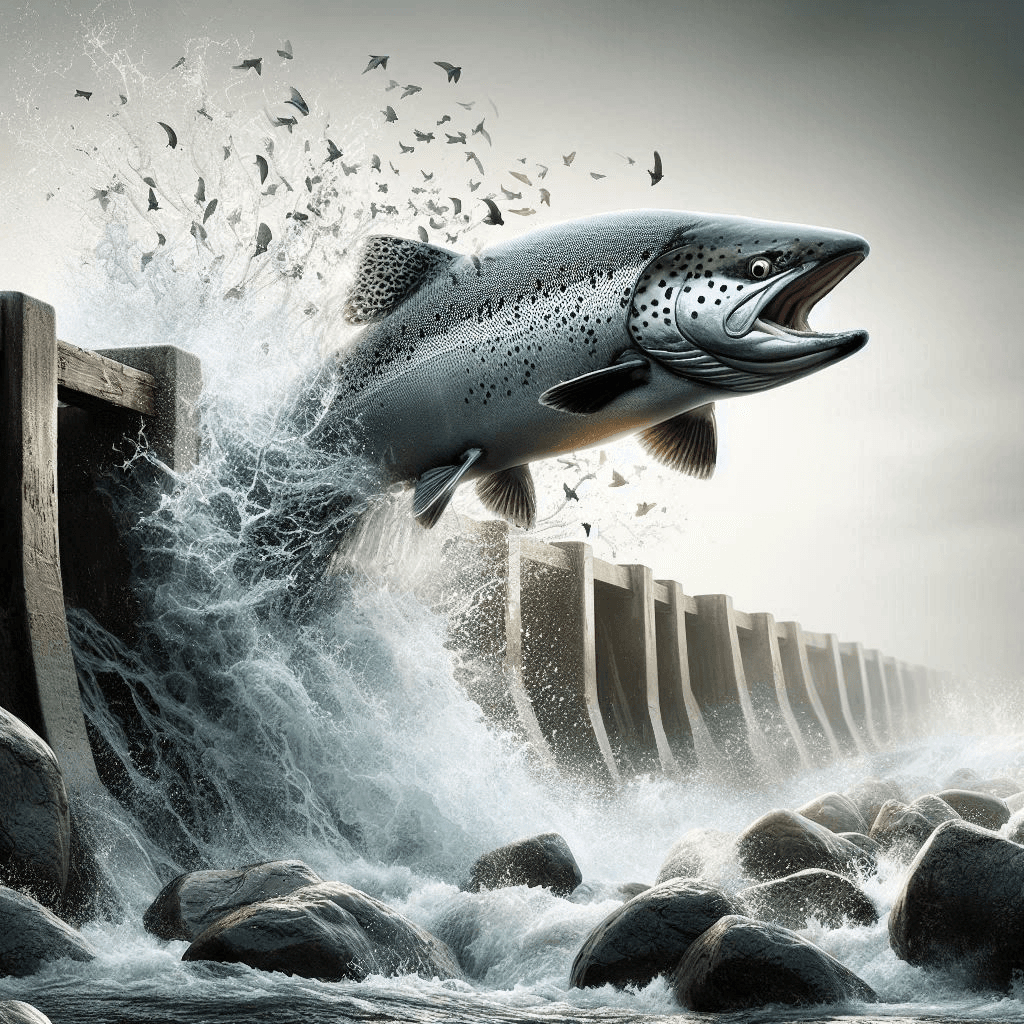
- Blocking Migration: Dams obstruct the passage of salmon between their spawning and rearing habitat to the ocean.
- Altering River Flow: Dams change the natural flow of rivers, which can disrupt the timing and success of salmon migration. This alteration can also affect the river’s temperature, making it less suitable for salmon.
- Creating Reservoirs: The reservoirs formed by dams overload shoreline areas, which can destroy historically spawning habitats.
- Changing Food Webs: By altering the flow and sediment transport, dams can change the food web in rivers, impacting the availability of food for salmon.
- Temperature Changes: Reservoirs can increase the water temperature to levels that are dangerous to salmon existence and breeding.
Fish Passage Technics and their Outcomes
Because of the Dams, the salmon population has reduced to less than 10 percent of its original volume. So as a counter and conservative measure the introduced Fish Passage Technics to bring back then salmon to their habitats, Fish passage technologies have gotten better, and people are trying to bring salmon back to many rivers they couldn’t reach for almost 100 years. This includes the upper Lewis, Cowlitz, and Green Rivers as well as the Columbia River above Grand Coulee Dam. In some places, like the Elwha, Middle Fork Nooksack, Pilchuck, and White Salmon Rivers, they’ve taken out dams. This has helped the salmon.
Improved Downstream Migration
Hydropower managers recently have altered flow rates over the dams in Columbia and Snake Rivers, that is, the amounts of water that pass over them rather than through turbines to help salmon. Referring to as spill, these flows have escalated the rate at which the juveniles get to the ocean and the probability of getting there without encountering turbines.