
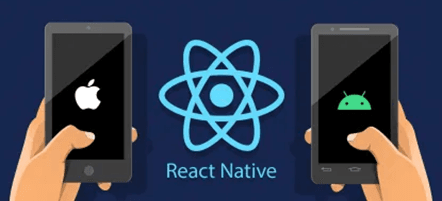
React Native is a widely-used mobile app framework based on JavaScript, enabling the creation of natively-rendered applications for both iOS and Android platforms. The framework lets you make an application for different stages by using the same codebase.
React Native was to begin with discharged by Facebook as an open-source project in 2015. In fair a couple of years, it got to be one of the best arrangements utilized for mobile development. React Native development is used in several of the world’s top mobile applications, such as Instagram, Facebook, and Skype.
We talk about these and other cases of React Native-powered apps assist in this post. React components, central to React Native, enable developers to connected consistently with existing native code, improving the framework’s capacity to coordinated with native APIs and permitting existing native teams to work much quicker. This interaction between React components and existing native code extends the capabilities of native app development to new teams of developers, making it a exceedingly effective and flexible solution for mobile app development.
The History of React Native
- When Facebook to begin with chosen to make its service accessible on mobile devices, instead of building out a native app like numerous best tech players at the time, they chosen to run with a mobile webpage based on HTML5. In any case, the solution didn’t stand the test of time, taking off much room for UI and performance changes. In truth, in 2012, Mark Zuckerberg conceded that “The greatest botch we made as a company was wagering as well much on HTML as restricted to native.”
- Shortly thereafter, in 2013, Facebook developer Jordan Walke made a significant announcement regarding a method for creating UI elements for iOS applications using JavaScript. This started a fire, and a extraordinary Hackathon was organized to assist find how much mobile development seem be done utilizing (so distant, customarily web-based) JavaScript solutions.
- That’s how React Native came to life. At first created just for iOS, Facebook rapidly taken after it up with Android support, sometime recently taking the framework public in 2015.
- Fair three years later, React Native was already the second greatest venture on GitHub, as measured by the number of supporters.
React JS vs. React Native
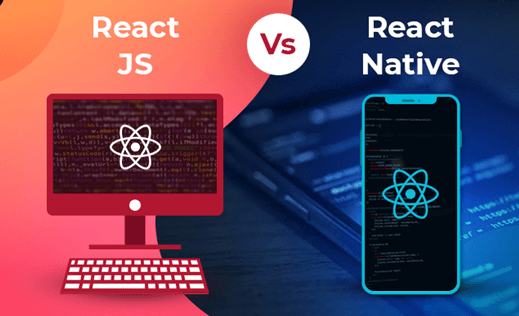
- ReactJS is a JavaScript library used for developing a website’s frontend. So also to React Native, it was moreover created by the Facebook engineering team.
- Meanwhile, React Local – which is powered by React – lets developers utilize a set of UI components to rapidly compile and launch iOS and Android apps.
- Both React and React Native utilize a blend of JavaScript and a extraordinary markup language, JSX. In any case, the syntax utilized to render components in JSX components varies between React and React Native applications. Moreover, React uses a few HTML and CSS, while React Native permits the utilize of native mobile user interface elements.
Cross-Platform Development

Cross-platform development is the practice of building computer program that is congruous with more than one type of hardware platform. A cross-platform application is capable of running on Microsoft Windows, Linux, and macOS, or on just two of these operating systems.
A good example of a cross-platform application is a web browser or Adobe Streak that performs the same, independent of the computer or mobile device you run it on. React Native has developed as a effective tool for cross-platform application development, empowering developers to make mobile applications that offer the execution and see and feel of native applications utilizing recognizable development tools.
Cross-platform is considered the heavenly chalice of software development – you can construct your codebase once and at that point run it on any platform, as restricted to software built natively for a particular platform. Developers are able to utilize the tools they’re capable in, like JavaScript or C#, to construct platforms they’re foreign to.
Example of Mobile Apps Built with React Native
Instagram :
Instagram chosen to coordinated React Native into its existing native app, beginning with the Push notification see that begun as the Web View. Luckily, it wasn’t essential to build the navigation infrastructure, as the UI was basic enough to cope without one.

Do follow links for more Contents : https://athenas.co.in/react-js-6-essential-features-for-beginners/ https://reactnative.dev/







2 Responses